Supernatural
Badger boy (7,100 words)
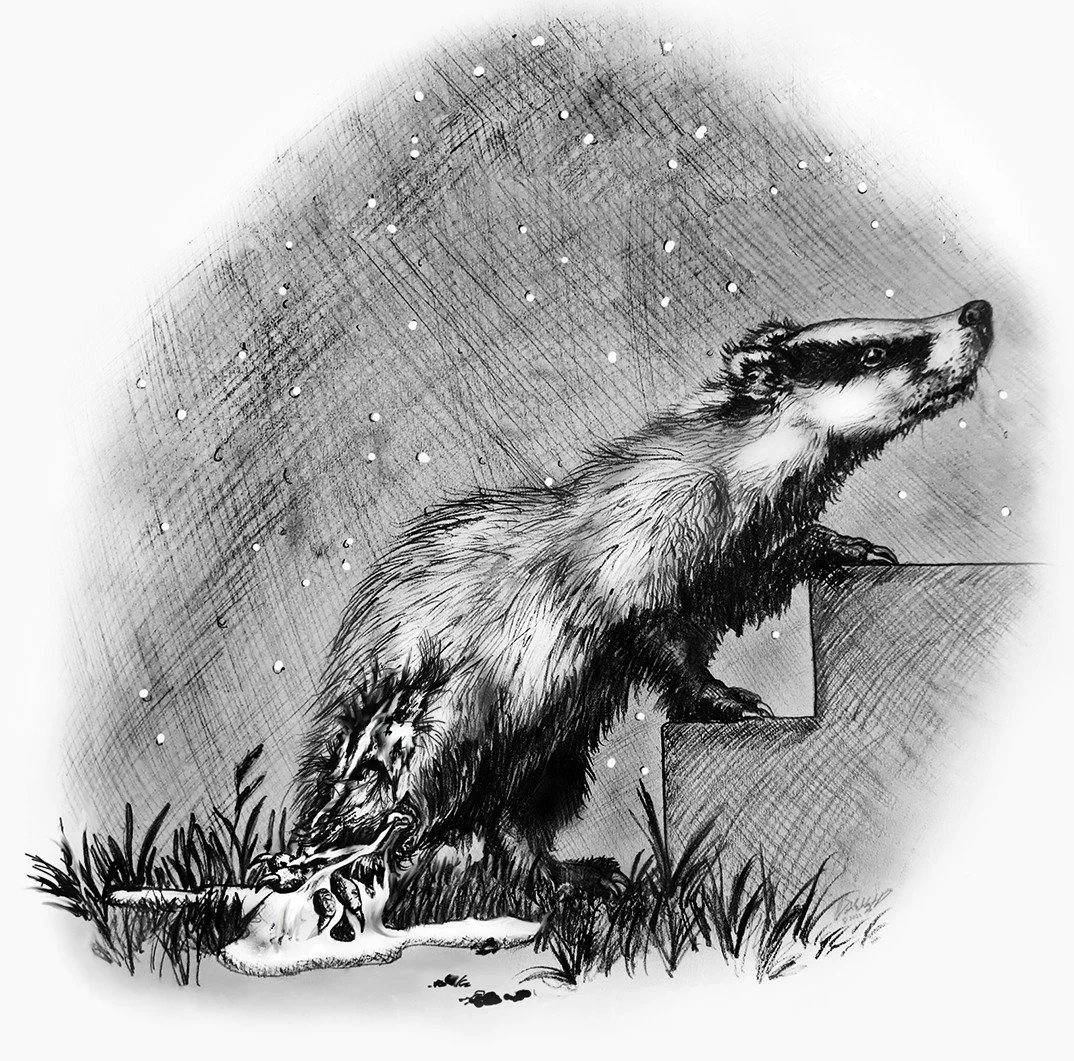
A long time ago I remember seeing a badger in moonlight; it emerged from a hedge and trotted across an expanse of grass. I have no idea why I was looking out of a window so late at night. It might have been in the days when I was experimenting with photography. The badger was much taller than I imagined badgers to be: it looked big and quite dangerous.
From this simple premise the storyline of Badger Boy came into my mind. It is one of those stories where I knew all along what the ending was going to be, and I guided the characters towards it. As a result I like to think the story conveys a terrible sense of inevitability and, even after all these years, I am rather pleased with its pace, structure and conclusion.
The flatulent ghost (3,000 words)
I am rather fond of The flatulent ghost, although it’s fair to say that some of my more sensitive friends felt otherwise. ‘It’s nicely done,’ they would say, ‘but…’ A grimace. Damning with faint praise.
It’s pretty obvious what the story is about - the clue lies in its title. Its structure is also simple enough: a taxi driver is taking the protagonist somewhere and, being a taxi driver, talks non-stop. Damn this traffic. Accident happened there last week. Do you know what happened in that house the other week? No? Then let me tell you…
The protagonist says not a word. Nor does anybody else. The taxi driver tells the story, tells it in his rather inimitable fashion. Tells it for me. And - maybe it’s just me, but the idea of a flatulent ghost just cracks me up.
The ticket collector (8,300 words)
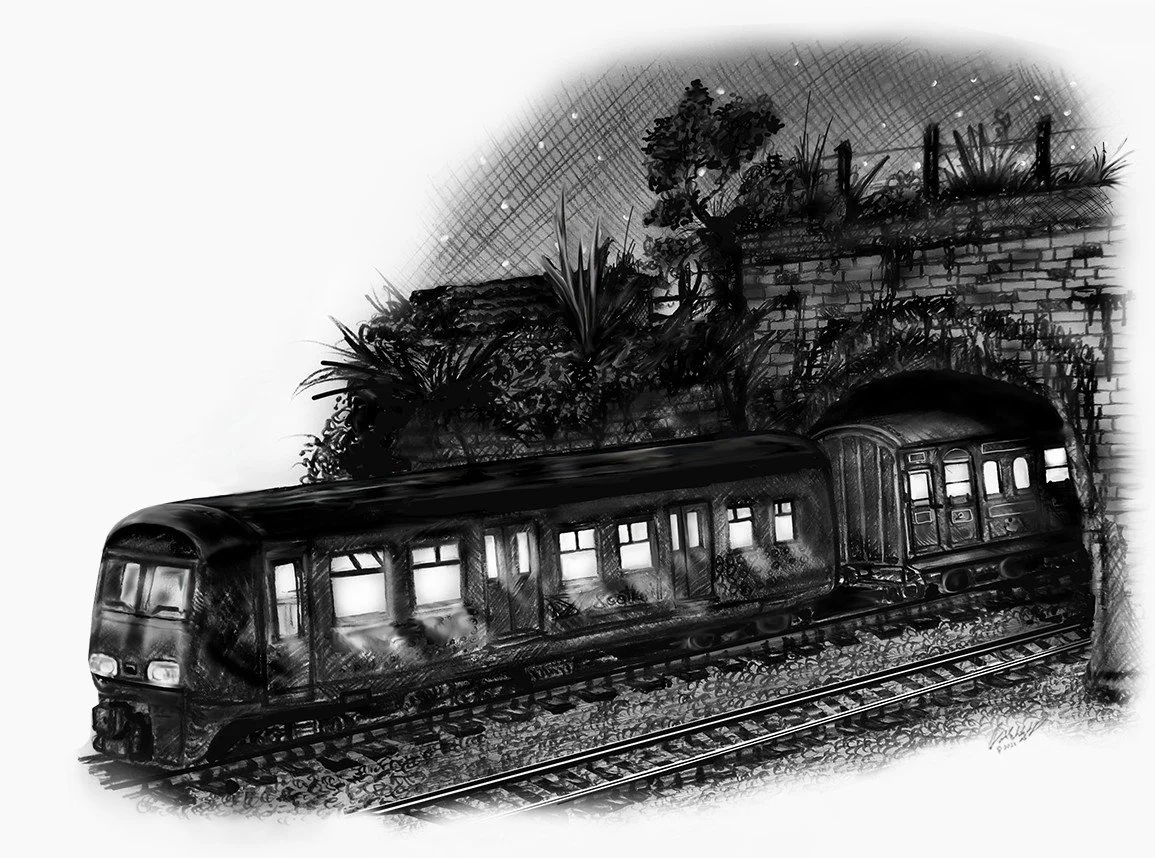
The Ticket Collector is unashamedly an old-fashioned ghost story. In the early 1990s I was working with the audit section of what was then Kyle and Carrick District Council (later to become South Ayrshire Council). We were based in something of a dungeon in the old Town Hall, and I recall writing it in something of a frenzy on a typewriter (yes, a typewriter!) as the storyline unfolded in my mind. What I remember best is the way the next section of the story came to me, almost word perfect, while I was still three-quarters of the way through the previous section. Hence the frenzy.
The descriptions of Glasgow Central Station, and the somnambulant trip down to Ayr, and the old blocks of flats opposite Ayr station, are all accurate. I made some copies of this story one Christmas and left them in the ticket office at Ayr Station for passengers to read on the train. I wonder if they did, and if so, what they thought of it?
Old habits (1300 words)
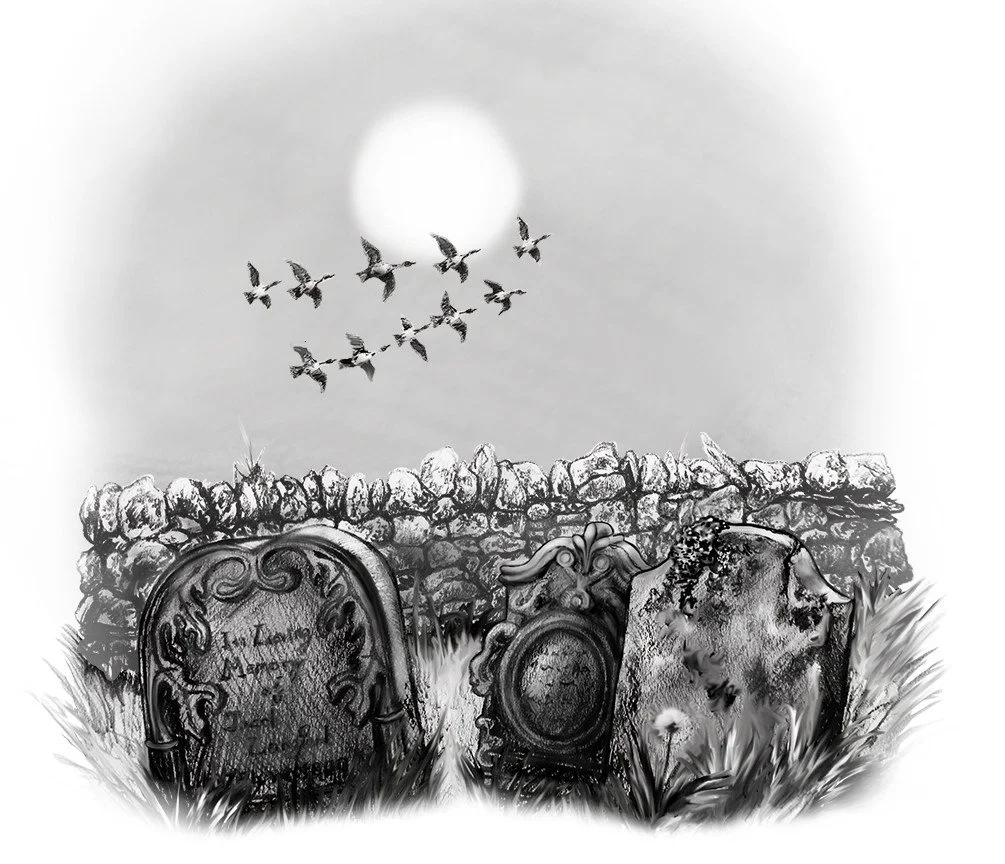
Old Habits is another story that had been in the back of my mind for quite a long time and it finally saw the light of day, along with Dark Triptych, in that tiny park in Barcelona. Apart from the wry humour implicit in the title, I tried to create a timeless atmosphere; the location, a graveyard, has its own ageless character; the weather, the surroundings, the sky, all appear to be fixed in a time warp; the conversations are slow-moving but, I hope, still meaningful. It’s not a complicated story, even if there is a little duplicity in the plot.
Old Habits merits a place here not because of any complex problems designed to make the reader think, but because of the gentle atmosphere it invokes.
The thirteenth shelf (8,500 words)
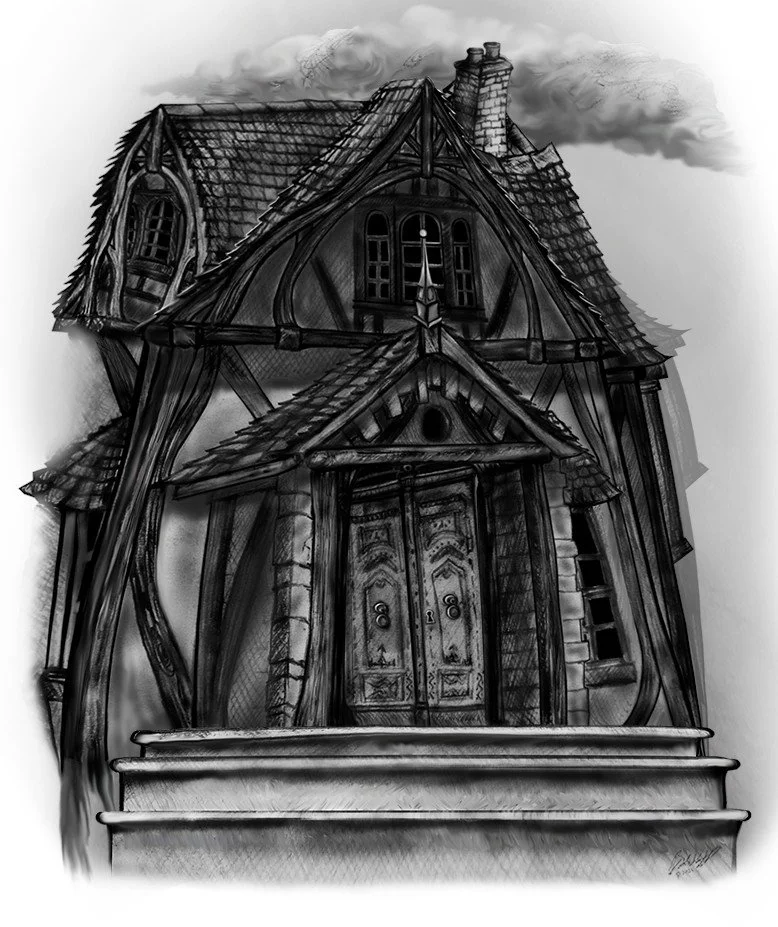
One of my more enjoyable jobs as a professional proofreader and copy-editor was to work on a series of chapbooks produced by Raphus Press, created by Alcebiades Dinez Miguel and Urs Rohrer. The stories in the chapbooks are all darkly mysterious and written in a heavy, traditional, almost old-fashioned style designed to emphasise the weird subject matter; and the subject matter always involves strange, archaic books and other publications, the very presence of which poses a danger to the world in general and the reader in particular.
Naturally I had to have a go at writing a story within these parameters, and The Thirteenth Shelf is the result. I poached the title and the overall idea from my set of children’s stories: I always meant to write a Thirteenth Shelf to add to that collection, but never got around to it. I included the ‘Alcebiades–Rohrer chapbooks’ in the story, and they were both delighted with the idea. The Thirteenth Shelf has also been published in David Longhorn’s Supernatural Tales Magazine.
Moving in (9,400 words)
Two of my books, Kindred Spirit and The Supernatural Experiment, feature the ghosthunter Cheyne Tully. I have written elsewhere how he chose his professional name, but what’s important here is that Cheyne comes from the London Street Cheyne walk, and that in turn comes from the marvellous set of stories created by William Hope Hodgson called Carnaki the ghostfinder. In that book Carnaki tells a spellbound audience, after dinner in his flat in Cheyne Walk, about his latest case. And then they are ejected out into London’s night air.
I decided to do the same thing and my ghosthunter Cheyne Tully tells another, more modern spellbound audience about his latest case. At the time of writing I have completed two and a half of these stories: Moving in is the first and The eternal woman is the second. I will add a third when I get around to it.
In Moving in Tully is faced with the problem of a ghost wandering around a flat. The newly ensconced and highly intelligent inhabitant of the flat can’t see the ghost but he knows something is wrong so, somewhat against his better judgement, he calls in Tully to investigate. Tully manages to track down where the ghost is coming from, and … wait. Too much information. Let’s just say that the job turns out to be a sight more complicated than Tully anticipated.
The eternal woman (4700 words)
This is the second of the tales Tully tells to his after-dinner audience. I did a little research for this one, mainly about the types of building that existed many years ago. I also got Tully to do some (fictional) research, about a woman who some years ago was not only a ghostfinder but also a talented translator of forms of old English.
I had another reason for writing this story. I had high hopes of David Longhorn accepting it for publication in Supernatural Tales, but I wanted the story to be a little different from most of the others you will find in his magazines. I will explain. I am the ‘assistant editor’ of the magazine, which means I proofread the stories and get to question bits that don’t read very well, and occasionally get to question entire stories which don’t seem to be good enough for publication. Maybe I am being a bit harsh on some of the would-be writers, but a lot of the stories submitted to Supernatural Tales exhibit very similar faults. The notion seems to be that if you describe something weird happening, then that’s all you have to do. Allow me to disagree. You need a bit of logic, a bit of context and grounding. Why is the weird thing happening? How did you get involved? What effect does the weird thing have on you, on other characters, on the surroundings? What’s the explanation for this weird thing? How does the story resolve?
Okay, I got a bit side-tracked there, but the point is that I get to read all the stories, and it struck me that most of them weren’t just ‘supernatural’ - they also included elements of horror. Gradually, virtually all the stories in the magazine were becoming supernatural horror stories.
Well, I wanted to write a supernatural story that didn’t have any elements of horror, but was nevertheless scary. The eternal woman is the result. David Longhorn did indeed accept it, and I think I did indeed achieve my aims. But, as usual, that’s for you to decide.
Story title
ssssss
sssssss
sssss
sss
ssss
ssss
ssss