Miscellaneous
Downtown (1100 words)
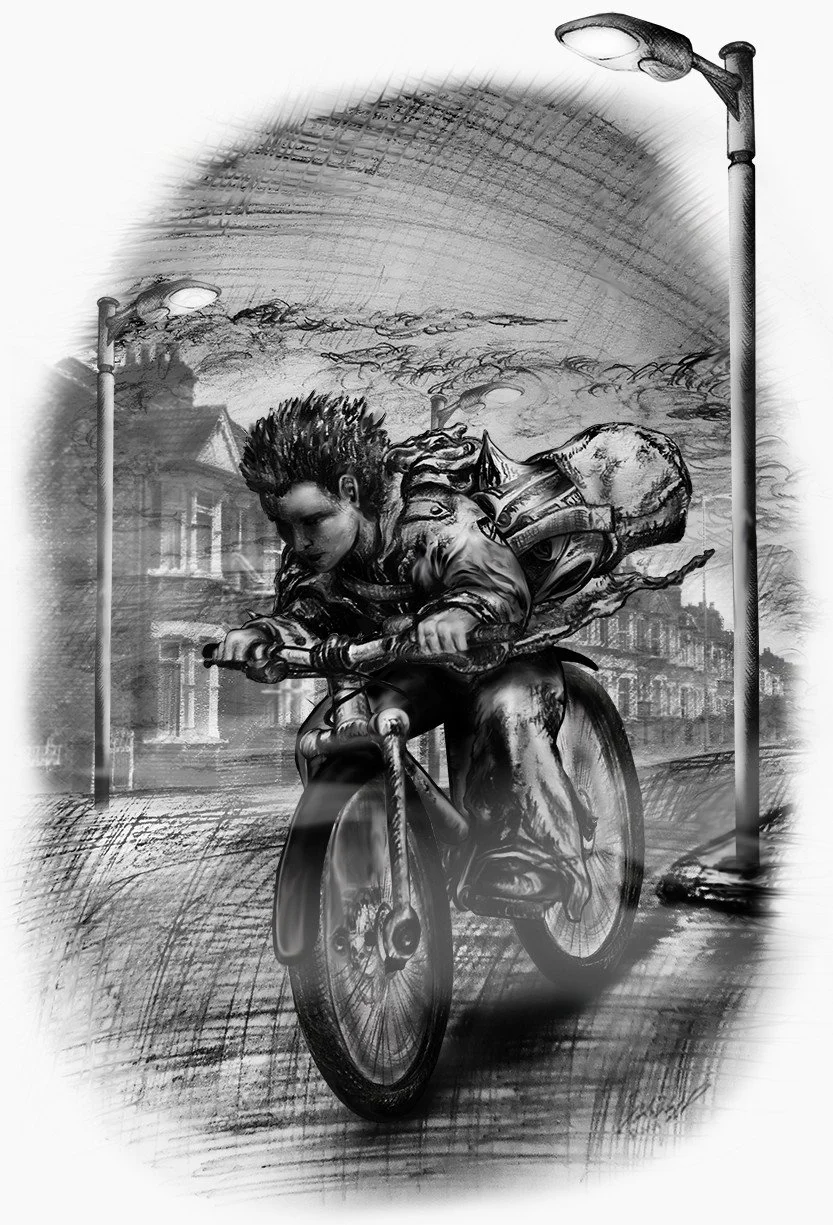
I wrote Downtown in a deliberately concise fashion, as an experiment, consciously trying to erase not just words but entire sentences which didn't add to the story or which could be wrapped up in a shorter fashion. I attacked viciously, excising virtually every adverb and adjective. I shortened descriptions or removed them, concatenated events or removed them, made dialogue as terse as I could. I wanted to tell the story using as few words as possible, but that meant making the words I did use powerful and evocative, conjuring up what I could see so clearly in my mind.
Thunderstorm
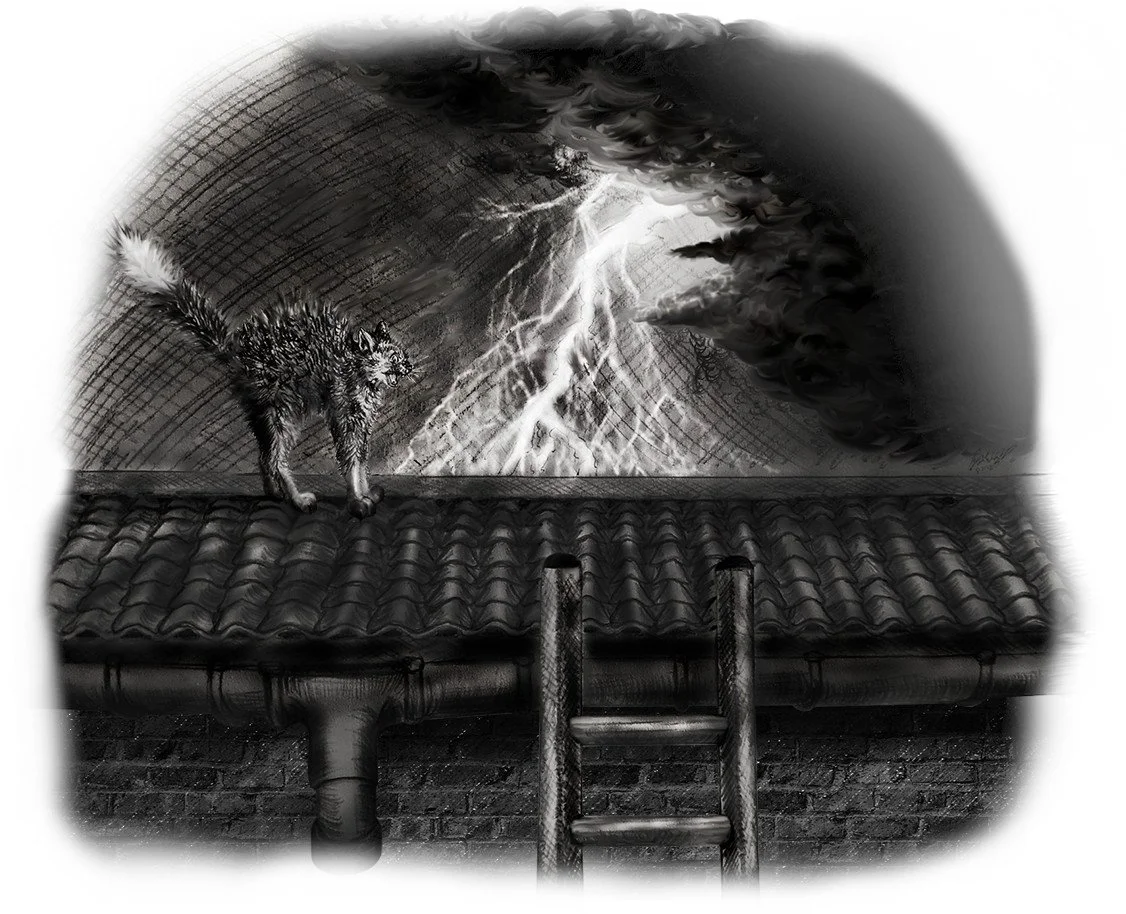
I admit it: Thunderstorm is not so much a short story as a whimsical shaggy dog story. But I make no apologies for including here, as it demonstrates another style of writing and adds a leavening of humour to the mix.
I had wanted to write something centred on a thunderstorm ever since I was a lodger in a house that was struck not once but twice by lightning. On both occasions the atmosphere turned a fizzy white and my hair stood on end. On the second occasion my landlord’s stereo equipment blew up, although for some reason the TV was spared.
The thunderstorm in Thunderstorm is bigger, darker and more powerful than those that hit in South London all those years ago, but I hope the events it put into motion are both logical and amusing.
Sparsile Books must have thought so, because they used Thunderstorm as one of their Sparsile Shorts on their own website.
Dark triptych (1600 words)
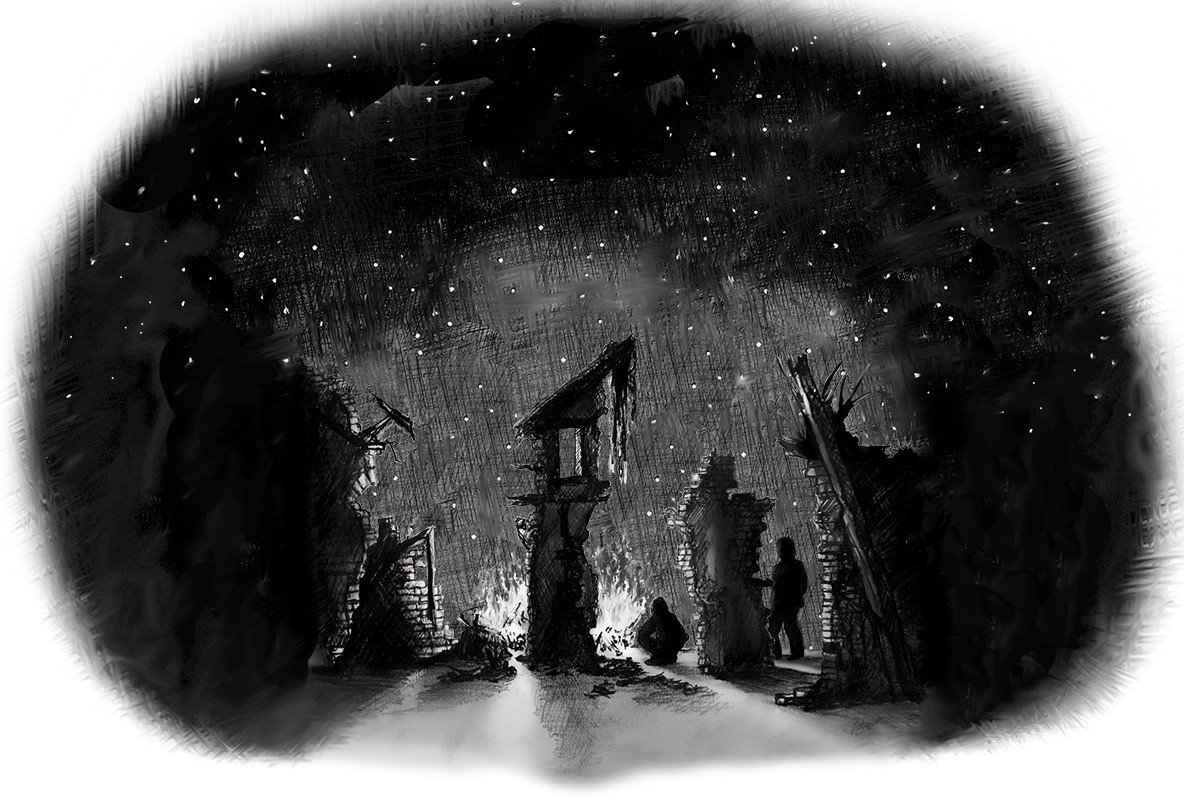
I had ideas for more than one story in the couple of years leading up to 2017, but just no time to write any of them. Then in 2017 we went on a short break to Barcelona, and I found a quiet park to sit in when it was too hot to do anything else. I wrote the bulk of Dark Triptych there, letting my imagination run away into the future, and devising different ways to describe and display the weird images and events flitting through my mind, while in the real world mums pushed their youngsters past in prams and couples wandered by, hand in hand.
In Dark Triptych I have mixed up something from our past with something from our future. That’s all the help I can give without spoiling the whole purpose of the story. No pain, no gain, as I remarked somewhere else on this site, remember?
Well, perhaps I can add one point of possible interest. I have long been a fan of Mark Z. Danielewski’s House of Leaves, which among other things has been acclaimed as a work of ergodic fiction. Some of this story is driven by the notion of ergodic fiction, too.
The bench (1800 words)
Inspiration for The Bench is easily pinpointed. On most days I walk along the beach promenade, sometimes with my wife, sometimes on my own if she’s off cycling or doing something even more energetic. And all the way along the promenade, at varying intervals, are benches fixed in place facing out to sea and the view of Arran. Some are metal, some or fashioned from wood. They vary in colour from bright yellow to deep blue to muddy brown. And an awful lot of them have little metal plaques screwed to them, in remembrance of someone who has died.
On occasions floral tribute is fastened to the bench in some way; a spray of flowers, or a small wreath.
As I walked past this parade of benches I found myself wondering not about the people who had died, but the people who had planned the plaque, or fastened the flowery tribute, or both. Were these people perhaps, like me, regularly walking along the promenade? I didn’t usually pay much attention to these people: I tend to recognise the dogs they are walking and rarely peer above waist level. But now that I had started wondering about who was responsible for putting out floral decorations as memorials, a story stirred in my mind.
The bench is the result. It’s not intended to upset anyone, but you might like to have a tissue handy. Nor is it meant to be especially sad: it’s more… sentimental.
Oh, read the story, and see for yourself!
Complications (7,800 words)
Complications is undeniably one of the oddest stories I have ever written. We have all heard of Franz Kafka’s story Metamorphosis, even if we haven’t necessarily read it. Gregor Samsa wakes up in the morning changed into an insect, after which - perhaps not surprisingly - his life falls apart. If I remember correctly, he ends up starving to death in his own room, unloved and alone.
Well, I thought, what if someone wakes up in the morning changed into Franz Kafka? Yes, it’s a bonkers idea, but it wouldn’t let me go. Further, I thought, what if the someone waking up was a girl, changed into a young man?
The story in written in a deadpan style. At the start, Frances (good name, eh?) doesn’t know what’s happening. In fact she never really understands; nobody in the story does. Kafka isn’t mentioned at all. I did some research, by the way, finding out what Kafka looked like, making a shortlist of the names of people he knew so I could factor them into the story (the names, that is, not the people). It was all great fun.
That is, it started off as great fun, poor old Frances not being recognised, not able to get into her normal clothes, not being able to get into her normal classes, for that matter, because she is clearly not Frances but some would-be imposter. But as the story went on it turned more into a description of how society handles people who don’t really fit in. By ignoring them. By prosecuting them. By rather hoping that they would just go away. The story ends up being not so much fun after all.
If you know anything about Kafka and his writing, you’ll recognise nods to people and his own stories throughout Complications. But it doesn’t really matter if you don’t. You should find the story stands on its own feet and is entertaining even if you have no clue who Franz Kafka was and no notion of any of his literature.
Story title
ssssss
sssssss
sssss
sss
ssss
ssss
ssss